
Nova Edge
Place connectivity and selected processing next to industrial equipment, while the devices, software, and operational context stay connected to the central Nova Vector platform.
Watch · 2:58 min
Three edge nodes imported and installed in one pass, the line's energy meter read through EdgeX and linked to the platform, the node's console and logs opened from the platform, an SSH session and a file upload to the node from the browser, a software update rolled out with checks on every node, and what keeps working when the link is down.
01Edge runtime
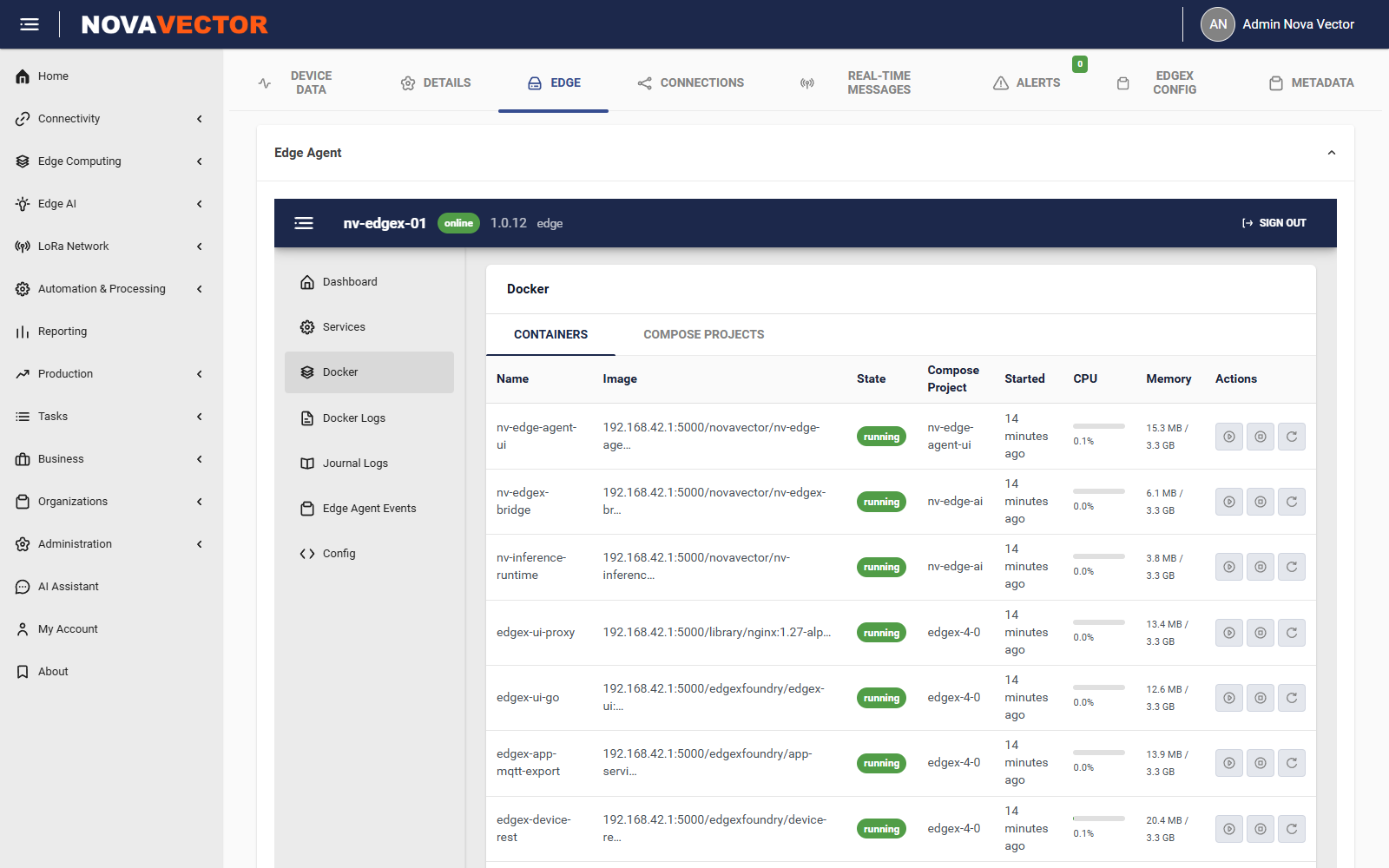
Nova Edge runs on an industrial PC or another Ubuntu machine at the site, on amd64 or arm64 hardware. Each edge node combines the Nova Vector Edge Agent with the software the site needs: EdgeX device services, the Edge AI runtime, and the local operator console. The bundle is chosen for each node type rather than assumed to be identical everywhere.
Use an edge node when equipment cannot reach the platform directly, when local processing reduces upstream traffic, or when the site must keep working while the link to the platform is down.
02Local device layer
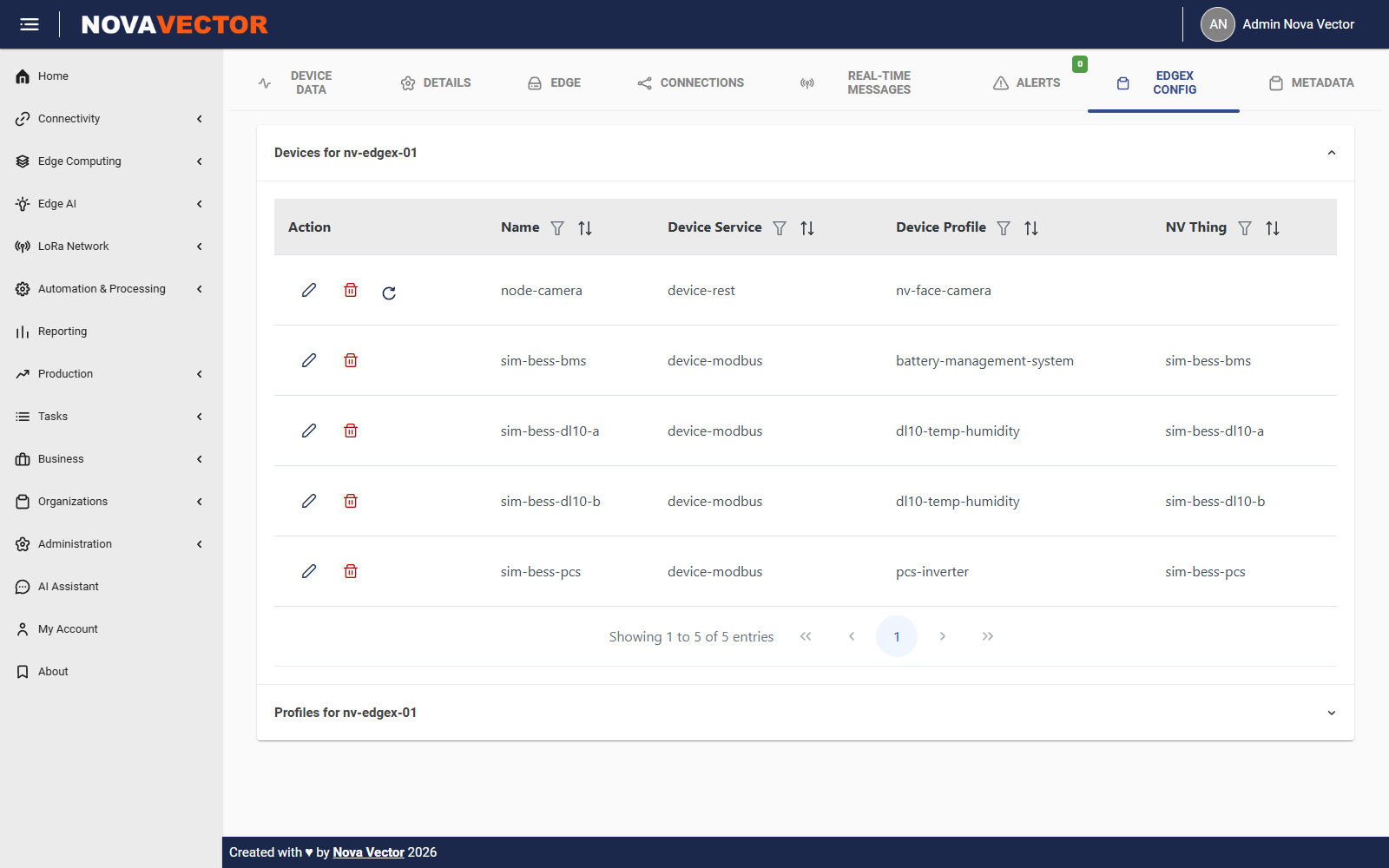
EdgeX Foundry device services talk to the PLCs, meters, and sensors at the site and give the rest of the edge stack one device and command model. Nova Vector links each EdgeX device to a platform device, so the site does not become a separate data island.
EdgeX releases 2.3, 3.1, and 4.0 are supported and packaged as approved bundles. The device-service set is chosen for each project rather than promising that every community device service works automatically.
03Readings on the platform
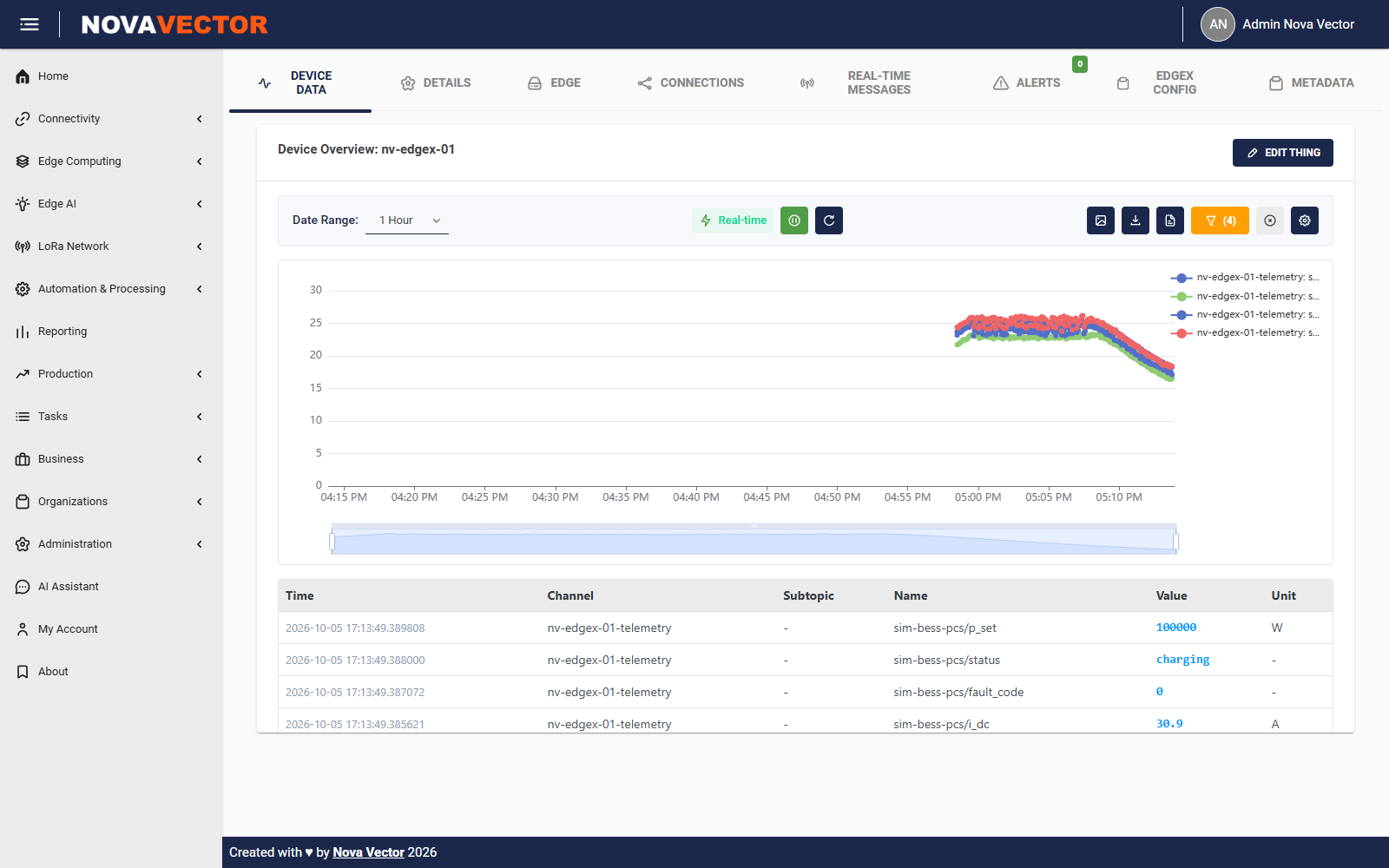
The node exports its devices' readings to the platform, where they are stored under the node with the device and reading name. Dashboards, reports, and tasks then work with them like any other data.
Local services can also filter, transform, and route selected data before it leaves the site, without turning the edge node into a disconnected second platform.
04Edge AI
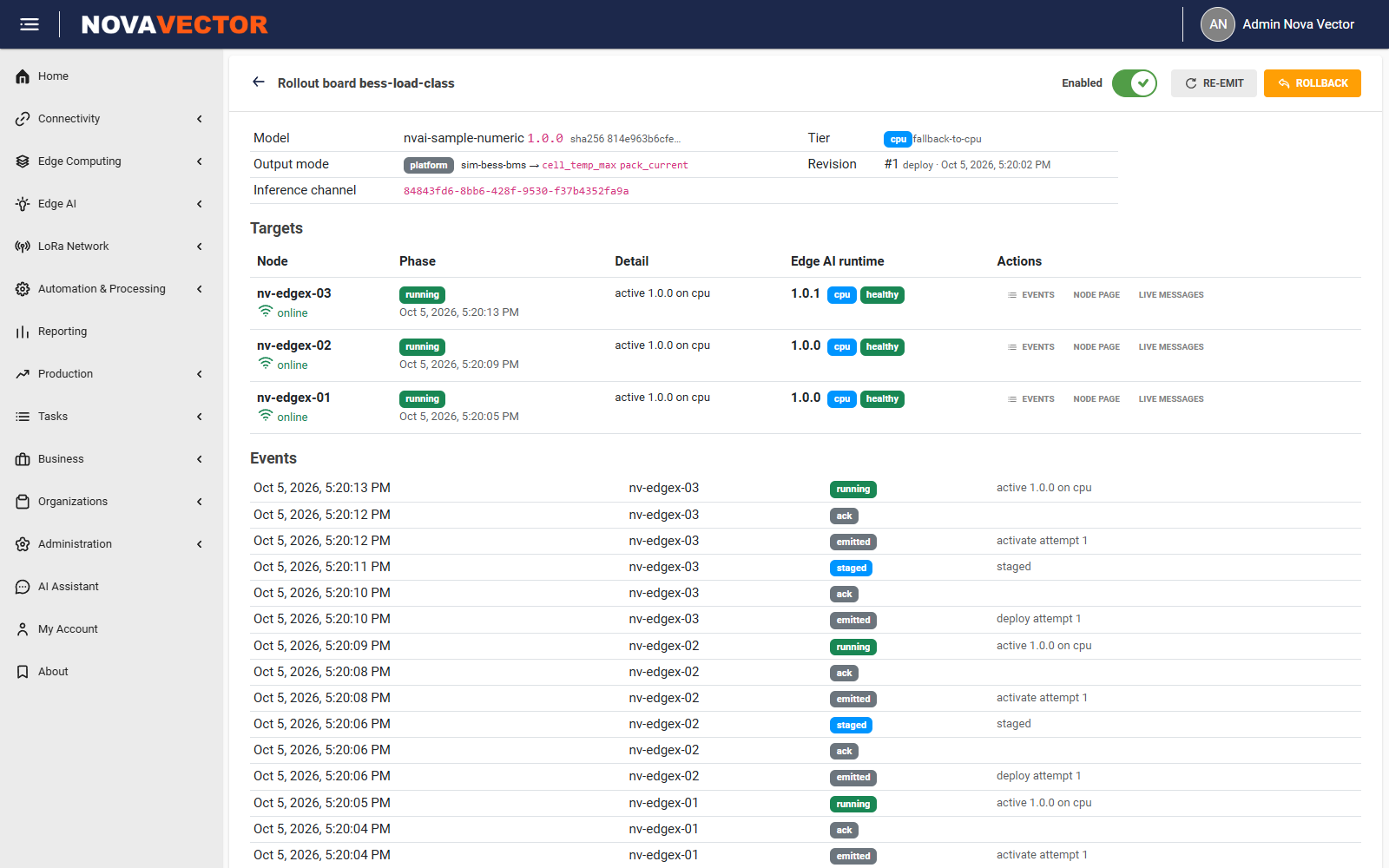
The Edge AI runtime loads an approved model on the node and runs it on every new reading of the bound device, with no round trip to the cloud. Results return to the platform as ordinary data, and can also act locally through EdgeX.
Models run on the node's CPU today, one model per node. The platform checks each node's architecture, runtime, memory, and storage before it deploys a model.
05When the link is down
EdgeX keeps reading the devices while the connection to the platform is down. Where a project needs it, EdgeX's export service can store readings it cannot deliver and send them when the link is back. Store and forward is switched on per installation in the EdgeX bundle settings.
The local console stays available on the node, with a local login when the platform cannot be reached, so technicians can check services, containers, and logs at the site.
06Managed operation
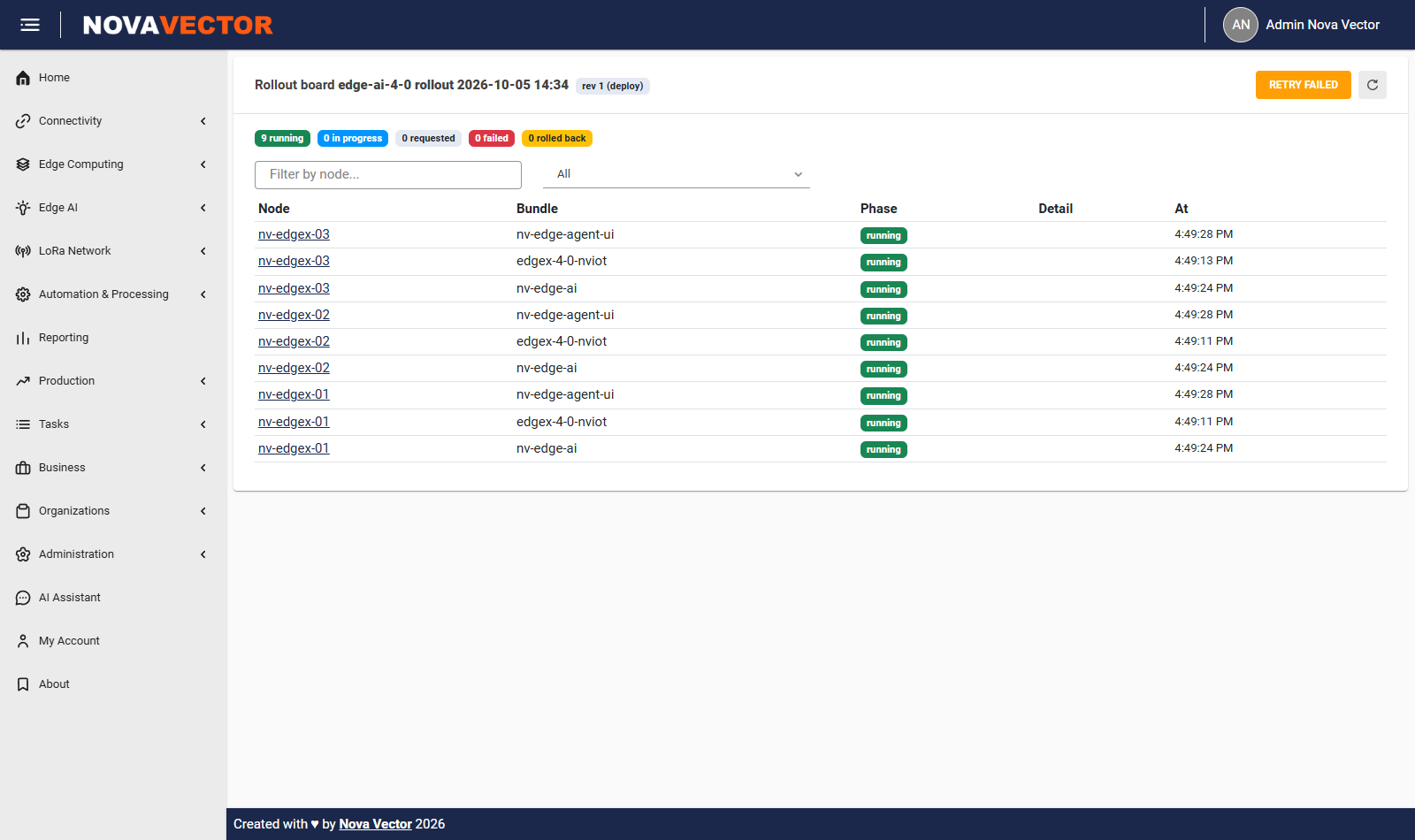
The Edge Agent monitors system services, Docker containers, and compose projects, and reports each node's state to the platform. Approved bundles are deployed through controlled rollouts with a stop threshold, retries, and health checks, and a node restores its previous version on its own when an update is not healthy.
Edge management is set up for each project as part of a Nova Vector deployment. It manages the industrial edge stack; it is not a general-purpose replacement for enterprise device-management software.
Continue evaluating
Discuss your architecture