
Platform and Edge AI
One registry and one approval for every model, run where it fits best, on the platform server for many machines at once or on an edge node next to one. Anomaly detection and a private AI assistant work from the same operational data.
Watch · 2:35 min
A dataset snapshot of the bottling line, one registry where every model version is approved and signed once, the same model deployed on the platform and on the edge nodes next to the line, a new version rolled out and rolled back in one step, and an anomaly rule that learns what is normal.
01AI-ready data
Nova Vector keeps every reading tied to its device, asset, process state, alarms, tasks, and production records. A model can then tell one operating mode, product, or shift from another, instead of guessing from isolated sensor values.
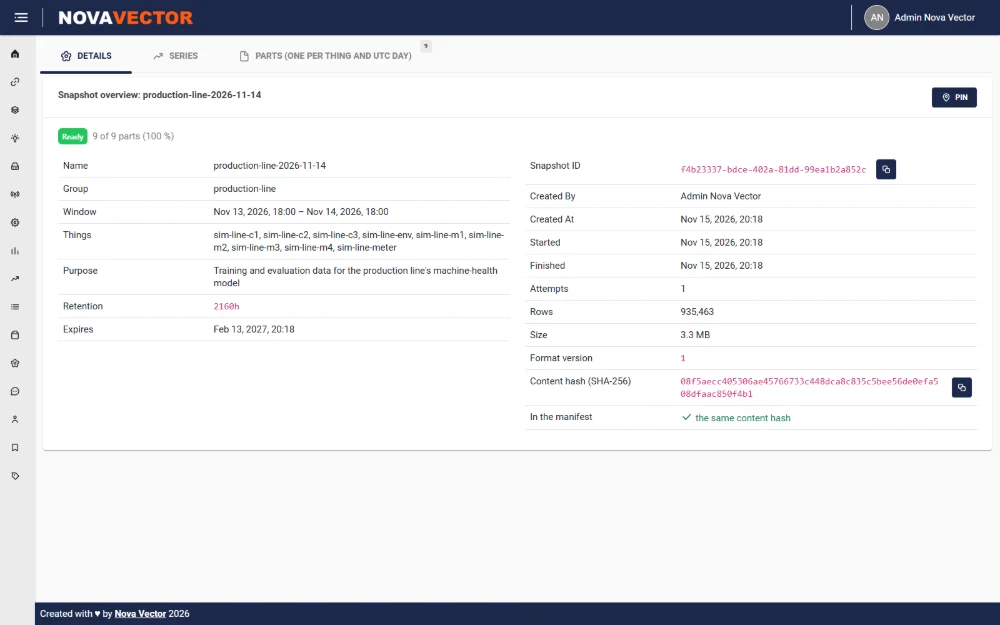
Dataset snapshots freeze a group's data for a time window as Parquet files with a manifest and SHA-256 hashes, so a model trained today can be checked months later on exactly the same records. The reasons people give when they acknowledge alarms, such as real fault, false alarm, or maintenance, can be included as labels, and every download is recorded.
02Model registry
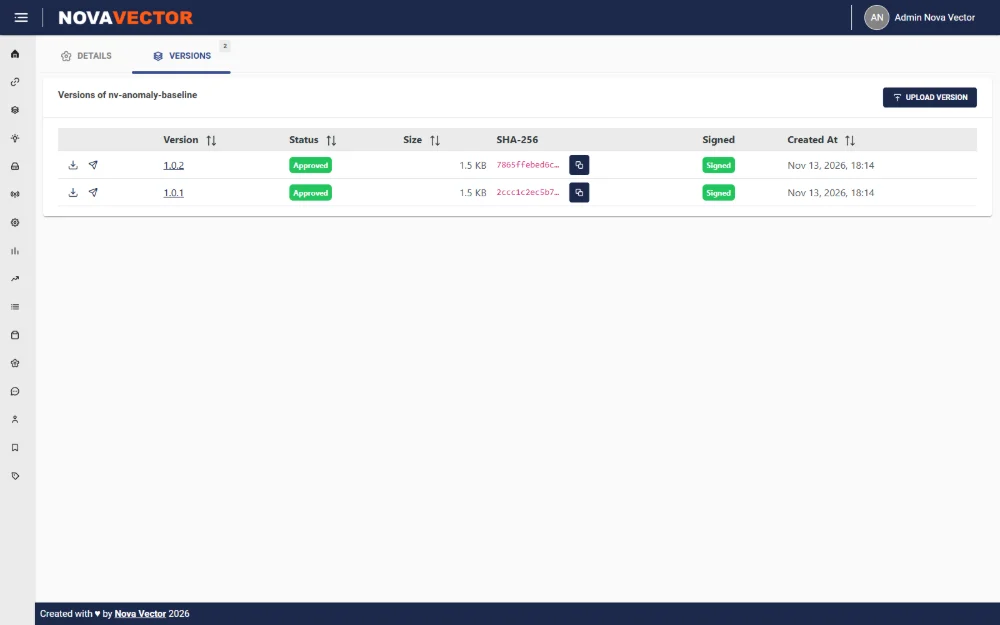
Models use the standard ONNX format, as exported by PyTorch, TensorFlow, scikit-learn, and most other training tools. Each version is one package with the model, a manifest of its inputs, outputs, and requirements, pre- and post-processing, and checksums for every file. The platform checks the package on upload and again before approval.
Versions move from draft to candidate to approved, and later to deprecated and retired. Only approved versions can be deployed, to edge nodes or to the platform, and each approval is recorded with who, when, and a note.
03Platform AI
Server-side inference runs a model next to the data the platform already receives, whatever protocol brought it in, such as MQTT, OPC UA, Modbus, or LoRaWAN. One deployment scores many machines of a group, each with its own window of readings.
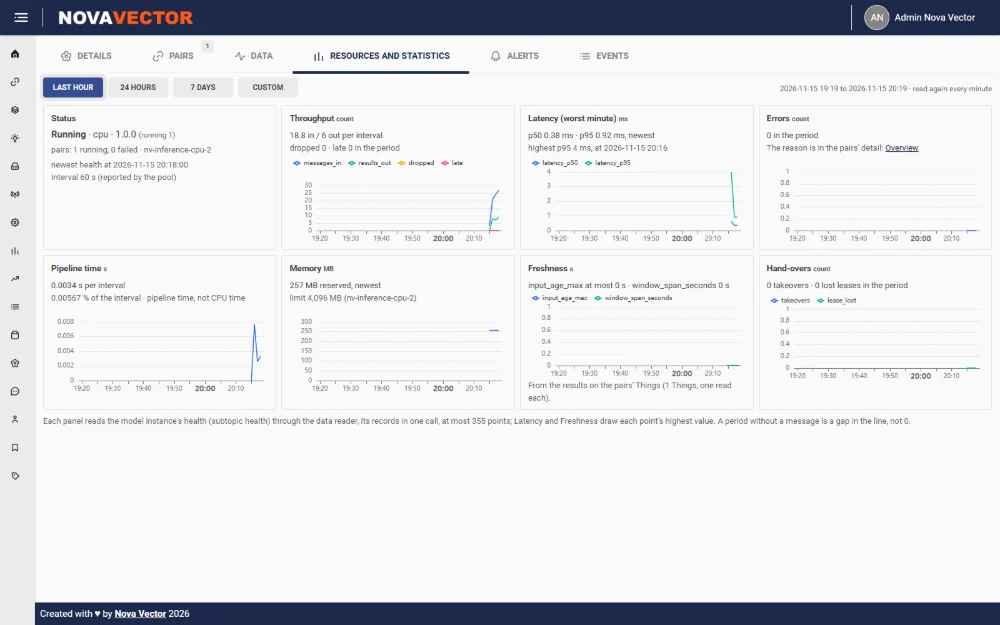
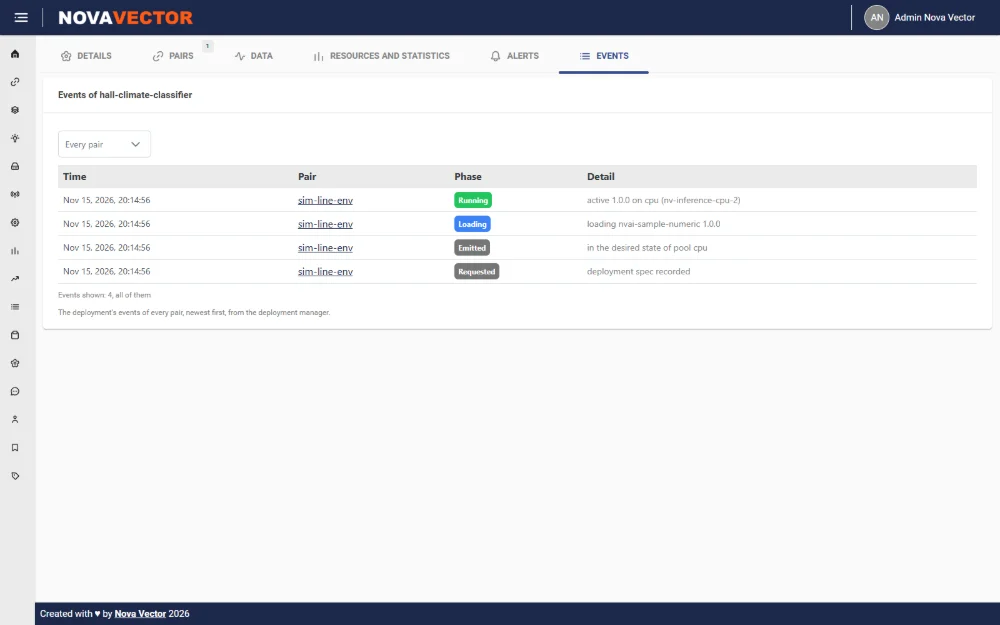
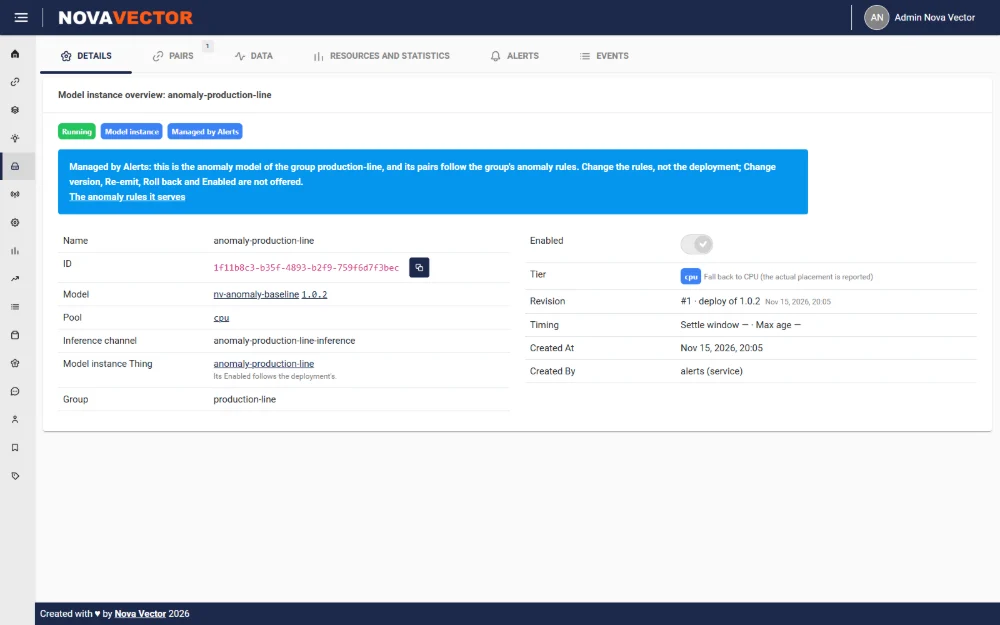
Models run in inference pools on CPU, or on GPU where a GPU server is installed. The instances of a pool share the work, and when one stops, the others take over its machines. The deployment wizard checks the pool against the model's requirements before anything runs, and each deployment's page shows its throughput, latency, errors, memory, and hand-overs.
04Edge AI
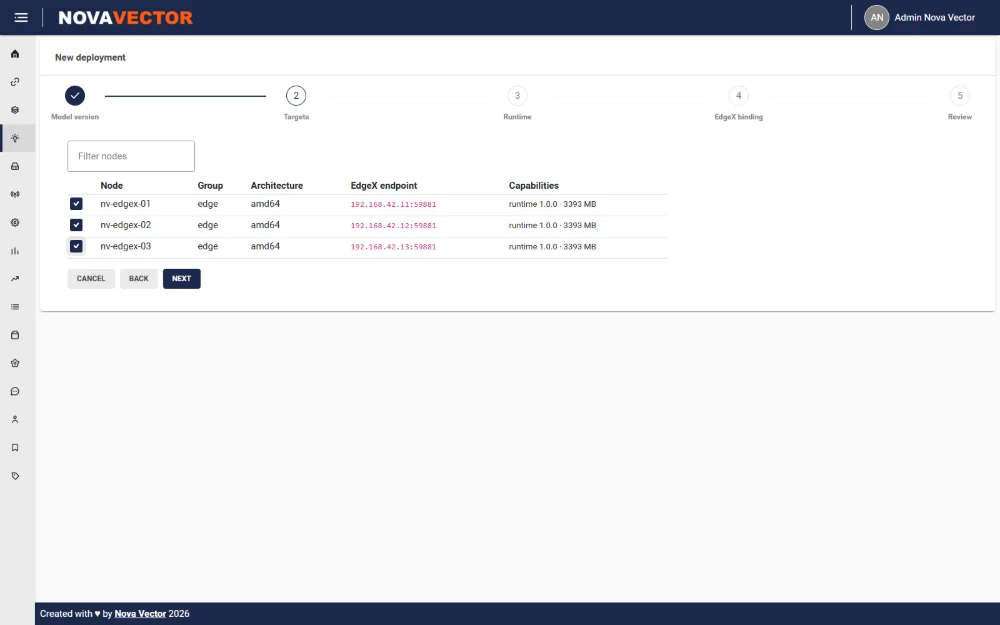
A wizard links one approved version to a set of edge nodes and to a machine on each node. Before anything is sent, the platform checks every node's architecture, runtime version, execution tier, and free memory and storage, and rejects a node that does not fit, with the reason.
Each node runs the model on every new reading of its machine with ONNX Runtime, with no round trip to the cloud, and keeps running without a connection. Results can go to the platform, back to the node as a virtual device for local logic, or both. Image models on camera pictures follow the same path.
05Safe rollout and rollback
Each node downloads the new version, checks it, switches to it, and checks its health. If the new version does not come up healthy, the node returns to the version it ran before. Platform deployments change version and roll back the same way.
Every node and every machine shows its phase, active version, and health, and each step of a rollout is recorded. A deployment can be rolled back for all its nodes together, or sent again to catch up a node that was offline.
06Anomaly detection
An anomaly rule needs no limits. A model on the platform learns each reading's level, daily rhythm, and noise, and scores every new minute against it. It catches spikes and noise within a minute or two, a stuck value in about ten minutes, and a slow drift in about two hours.
On the platform's evaluation set of simulated plants with injected faults, rules at the default sensitivity caught 85 % of the faults and raised about one alarm every five days on normal data. Before a rule is saved, it runs over the last seven days of history to show where it would have fired.
07Results
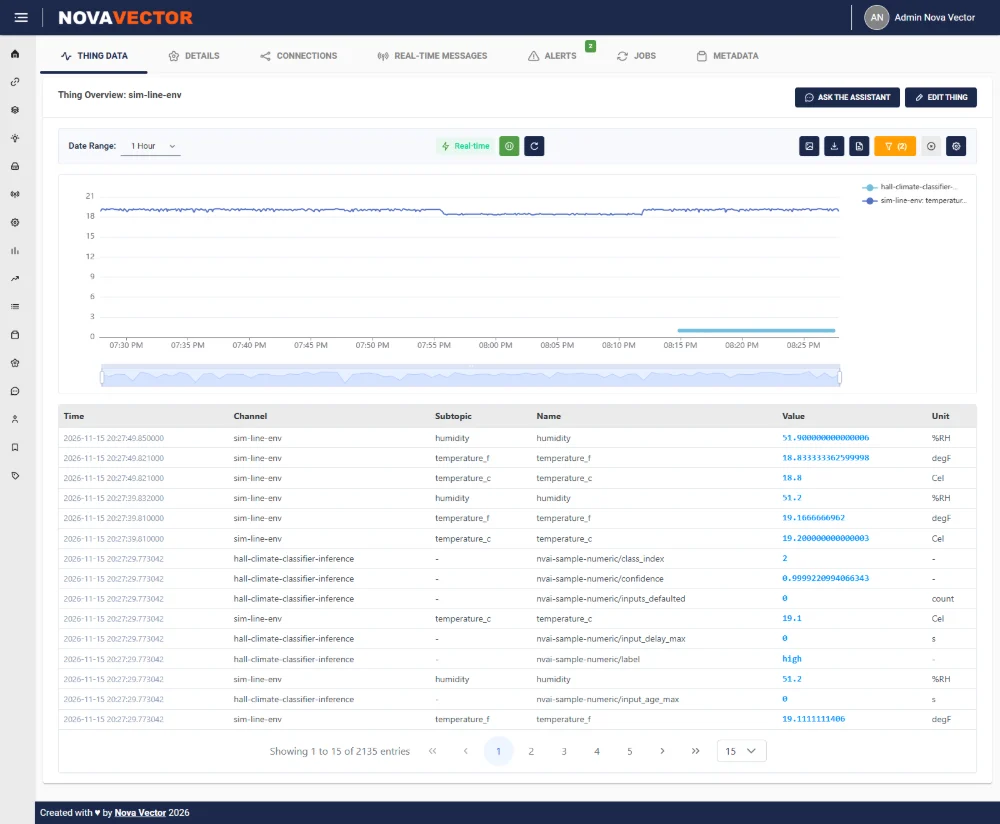
Results such as a class, a label, a score, or a confidence value return through the normal data path, on the deployment's own channel. They are stored and charted next to the measurements that produced them, and an alert on a result opens a maintenance task like any other alarm.
Every platform deployment also appears as a model instance, a device of its own that publishes the model's health. Charts, alerts, and the API can watch a model the same way they watch a machine.
08AI Assistant
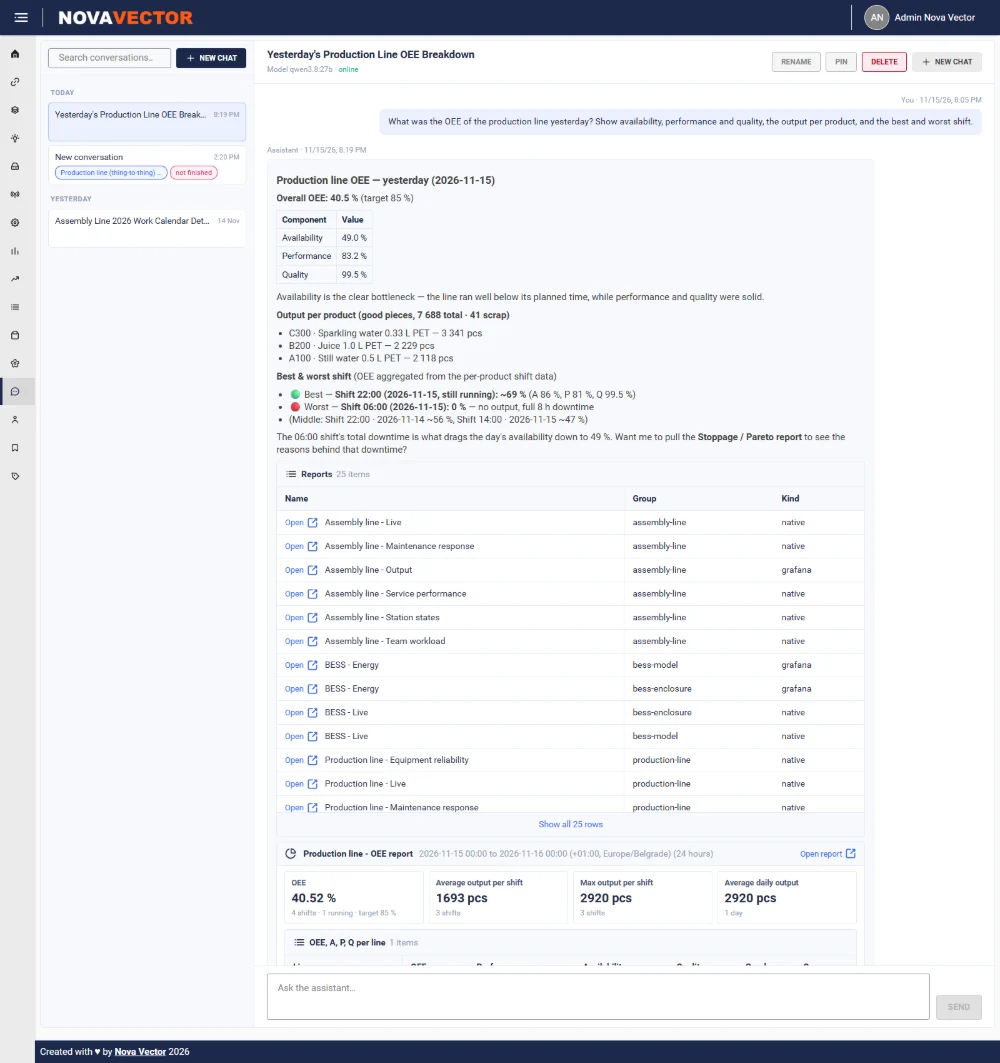
The assistant answers from live platform data, such as devices and their readings, alarms and their state, tasks, production plans, and the OEE, stoppage, and reliability reports. It uses the platform's own definitions, so its OEE is the report's OEE. Answers come with tables, charts, and links, in English or Serbian, and a conversation can start from any device, alarm, or report.
It works with the user's own login, so it sees and changes only what that user may. Creating, changing, or deleting devices, sending commands, and controlling simulations always wait for the user's approval.
09Private and governed
The language model runs on a model server in your own environment, and questions and data do not go to an outside AI service. Only models that pass a qualification test of 65 questions are used, including checks that the model ignores instructions hidden in the data, and every answer names the model that wrote it.
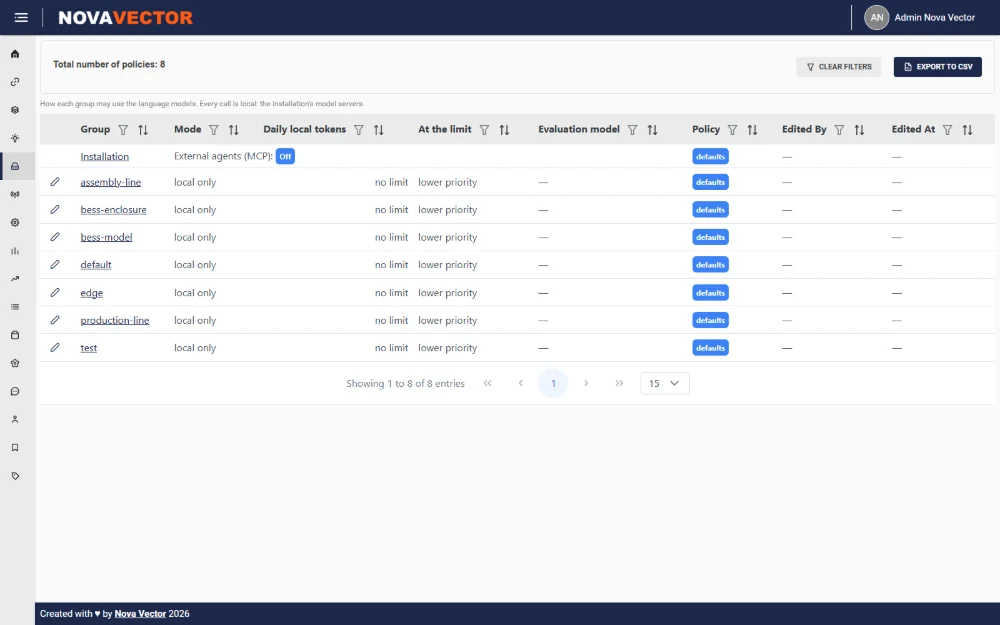
Administrators set a daily limit for each group, see usage per group and model, and read an audit of every model call, function call, and setting change, without the text of the questions being stored. Users' own AI agents, such as Claude Code or VS Code, can connect over MCP to read the platform with their own permissions, once an administrator allows it.
Continue evaluating
Discuss your architecture