
Industrial solution
Bring building and infrastructure data into the same device, time-series, alert, and response model used by the rest of Nova Vector.
Watch · 2:03 min
LoRaWAN room sensors with temperature, humidity, CO₂, air quality and movement, room dashboards that show occupancy and comfort, heating, cooling and water consumption per meter, month and shift, and comfort limits that open tasks for facility staff.
01Building systems
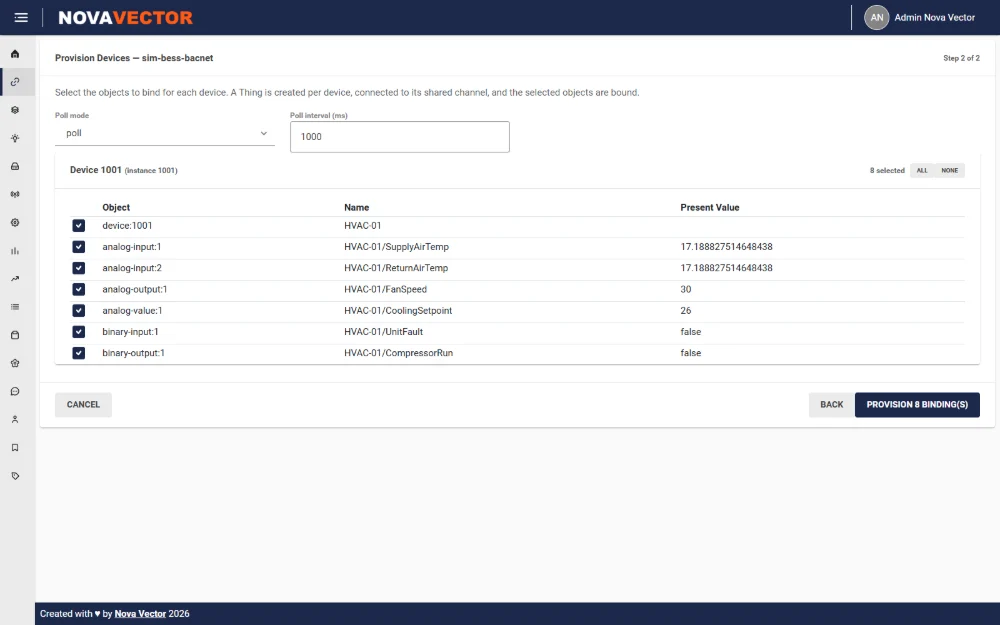
BACnet/IP discovery finds compatible building-control devices on the network and lets you browse their objects before adding them, so HVAC, lighting, and other systems join the device model without manual address lists.
MQTT, HTTP, and WebSocket provide additional IoT paths, and edge nodes can be introduced where a site benefits from local connectivity or processing.
02Network and infrastructure equipment
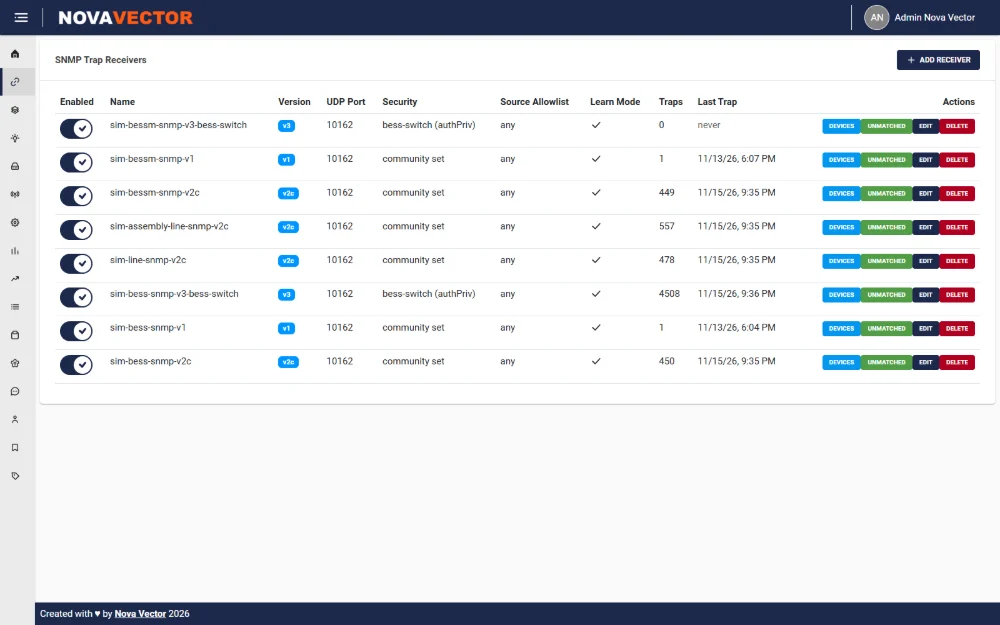
SNMP trap receivers turn traps from switches, UPS units, and other infrastructure equipment into readings and alarms, including SNMP v3 with authentication and encryption.
03Field sensors
LoRaWAN connects battery-powered sensors across large sites and remote locations through the LoRaWAN network server bundled with the platform. It has been in production use for years in smart agriculture, and the same approach fits environmental, utility, and occupancy sensing in facilities.
04Asset context
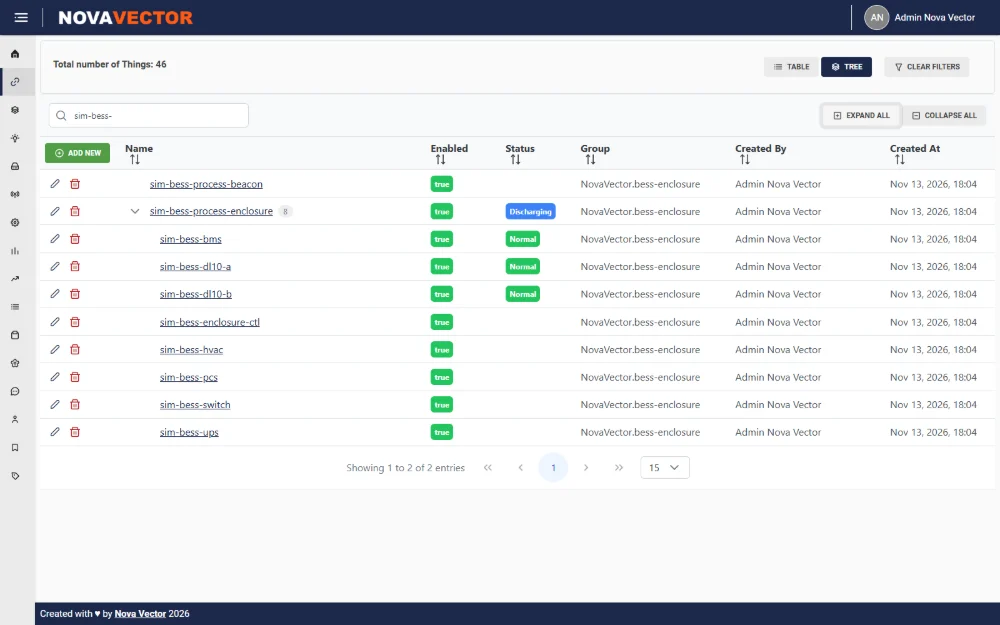
Buildings, floors, rooms, utility systems, equipment, meters, and sensors are represented through the device hierarchy, so a user can move from a site view into a specific device and its live or historical data.
Reusable profiles give repeated device types a consistent description, standardizing the meaning of measurements across similar meters, controllers, or sensors.
05Monitoring and reports
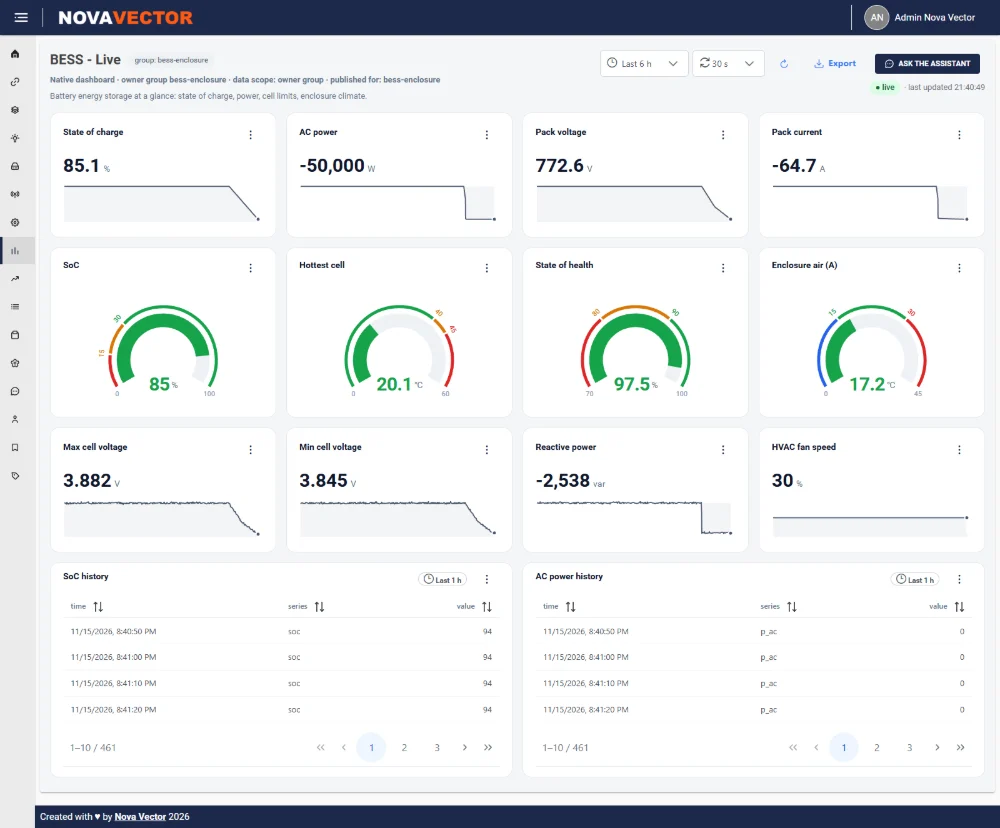
Device pages give direct access to current readings and history, with chart, PDF, PNG, and CSV exports. Dashboards built in the platform, or in embedded Grafana, cover broader site and system views, such as energy and utility use per area or system.
Facility reports are configured to the project's available data and objectives, rather than taken from a fixed library of building-management reports.
06Alerts and response
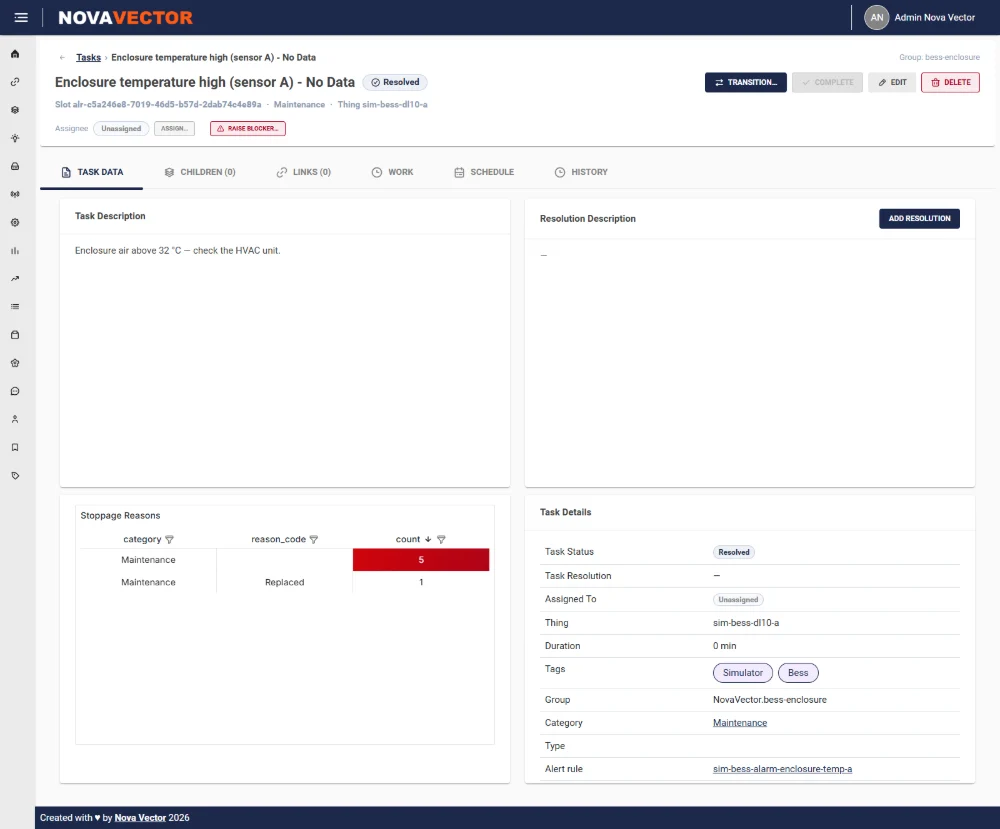
Alert limits and no-data checks identify abnormal or missing measurements. Notifications are sent by e-mail to the configured recipients, and tasks keep the originating device and alert context through assignment and resolution.
For infrastructure operations, the important outcome is not only showing an alarm, but making sure somebody owns and closes the resulting work.
Continue evaluating
Discuss your architecture